Physical Address
304 North Cardinal St.
Dorchester Center, MA 02124
Physical Address
304 North Cardinal St.
Dorchester Center, MA 02124

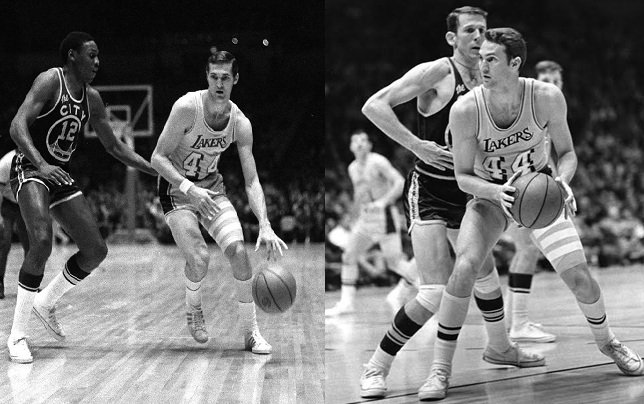
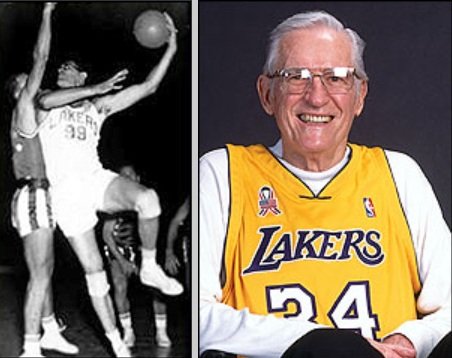
When discussing the history of basketball dominance, the conversation must begin with George Mikan. Standing at a towering 6-foot-10 and weighing 245 lbs, Mikan was the first truly dominant center in professional basketball history, fundamentally changing how the game was played, defended, and structured.
Known fondly as “Mr. Basketball,” Mikan was the cornerstone of the professional league’s first true dynasty, the Minneapolis Lakers (the franchise that later relocated to become the Los Angeles Lakers). He was so hard to defend and score against that sports governing bodies literally had to alter the rules of the game just to keep him from completely overwhelming the league. In 1950, Mikan was voted the greatest basketball player of the first half of the century by The Associated Press.
Here is the official and precise statistical breakdown of George Mikan’s legendary professional career:
| Metric / Category | Career Total / Percentage | Historical Context |
| Games Played (G) | 439 | 20-Year Legacy Era |
| Field Goal Percentage (FG%) | .404 | Elite Post Efficiency for the 1950s |
| Free Throw Percentage (FT%) | .782 | Incredible Accuracy for a Big Man |
| Total Rebounds (Rebs) | 4,167 | Dominant Rim Presence |
| Rebounds Per Game (RPG) | 9.5 | Career Backboard Dominance |
| Total Assists (Asts) | 1,245 | Outstanding Playmaking Vision |
| Assists Per Game (APG) | 2.8 | Highly Versatile Inside-Out Passer |
| Total Career Points (Pts) | 10,156 | First Era Pioneer to Break 10k |
| Points Per Game (PPG) | 23.1 | Unstoppable Scoring Force |
Born on June 18, 1924, in Joliet, Illinois, George Lawrence Mikan Jr. attended Joliet Catholic and Quigley Prep before taking his talents to DePaul University. Before the 1940s, the notion that a player could be tall and agile enough to swat a basketball away while it was directly above the rim was unthinkable. Mikan completely changed that by perfecting the art of goaltending which was perfectly legal at the time because authorities thought it was physically impossible.
“We would set up a zone defense that had four men around the key and I guarded the basket,” Mikan once recalled. “When the other team took a shot, I’d just go up and tap it out.” He swatted away so many potential baskets at DePaul that the NCAA was forced to officially outlaw goaltending.
Named College Player of the Year twice and a three-time All-American, Mikan led DePaul to the prestigious NIT title in 1945. During that historic championship run, he shattered the collegiate single-game scoring record by dropping 53 points against Rhode Island State—single-handedly outscoring the entire opposing team.
Mikan’s professional debut came in 1946 when he signed with the Chicago American Gears of the National Basketball League (NBL). Dominating pros just as easily as college athletes, he averaged 16.5 PPG, won the league championship, and made the All-NBL Team as a rookie.
Before the 1947–48 season, the owner of the Gears pulled the club out of the NBL to form a separate 24-team league called the Professional Basketball League of America. The new league went bankrupt within a month, and the players were distributed via a lottery system to the remaining NBL franchises. By pure stroke of luck, the newly formed Minneapolis Lakers landed Mikan.
Teaming up with forward Jim Pollard, Mikan formed an intimidating frontcourt. The Lakers rolled through the NBL playoffs, defeating the Rochester Royals to win the championship. Mikan averaged a stellar 21.3 PPG in the regular season and spiked it to 27.5 PPG in the Finals.
Before the 1948–49 campaign, the Minneapolis Lakers defected to the Basketball Association of America (BAA), which featured big-city franchises in New York, Boston, and Chicago. Mikan put up numbers that were unbelievable for that era. His league-leading 28.3 PPG accounted for a staggering one-third of the Lakers’ total point production.
During the 1949 BAA Playoffs, the Lakers advanced to the Finals against Red Auerbach’s Washington Capitols. In Game 4, Mikan suffered a severely broken wrist. Showing the rugged, hard-nosed mentality that defined his career, Mikan played Game 5 and Game 6 with a plaster cast on his hand, pouring in 22 points to secure the BAA Championship.
Following a merger between the BAA and NBL, the modern NBA was born for the 1949–50 season. Mikan topped the brand-new league in scoring by averaging 27.4 PPG. Minneapolis cruised through the playoffs and faced the Syracuse Nationals in the Finals, clinching the inaugural NBA Championship in Game 6. Mikan averaged a dominant 31.3 PPG throughout that postseason.
Mikan drew massive sellout crowds wherever he went. Fans clamored to see the bespectacled Goliath execute his deadly hook shots with either hand. However, his style of play was punishing; over his career, he suffered 10 broken bones and required 16 stitches, frequently leading the league in personal fouls.
To curb his absolute dominance, the NBA took drastic measures:
Despite the rule changes, Mikan kept winning, guiding the Lakers to three consecutive titles from 1952 to 1954, marking five championships in six remarkable seasons.
At just 29 years old, following the 1954 championship, Mikan stunned the basketball world by announcing his retirement to focus on his growing family and legal career. However, seeing his beloved Lakers on a losing skid during the 1955–56 season, he staged a brief comeback, playing 37 games and averaging 10.5 PPG before retiring for good. He briefly served as the team’s head coach in 1957–58 before stepping down.
Away from the hardwood, Mikan established a successful corporate and real estate law practice. In 1967, he returned to sports as the first commissioner of the American Basketball Association (ABA). Looking to improve television viewership and merchandise sales, Mikan introduced the legendary red, white, and blue multicolored basketball and instituted the pioneering 3-point line. Later in the mid-1980s, Mikan successfully spearheaded the task force that brought an NBA expansion franchise back to Minnesota, creating the modern-day Minnesota Timberwolves.
George Mikan passed away on June 1, 2005, in Scottsdale, Arizona, at the age of 80 due to complications from diabetes. He was an inaugural inductee into the Naismith Memorial Basketball Hall of Fame in 1959 and was named one of the 50 Greatest Players in NBA History in 1996.
Mikan’s death brought widespread media attention to the financial hardships faced by early-era NBA pioneers, leading to significant movements for better pensions for retirement-age players. Today, George Mikan stands as the bedrock upon which the entire winning culture and elite tradition of the Lakers franchise was built.