Physical Address
304 North Cardinal St.
Dorchester Center, MA 02124
Physical Address
304 North Cardinal St.
Dorchester Center, MA 02124

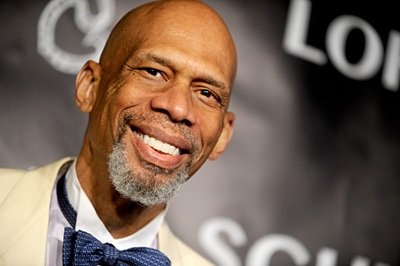
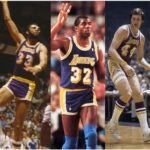
When it comes to basketball greatness, few names carry as much weight, history, and dominance as Kareem Abdul-Jabbar. Standing at a towering 7.2 Feet and weighing 267 pounds, he didn’t just play the game—he completely revolutionized the center position.
By the time he retired from the NBA in 1989 at the age of 42, no player in league history had scored more points, blocked more shots, won more MVP awards, or logged more seasons. His list of accomplishments is perhaps the most awesome in sports history. This is the complete story of the man who ruled the courts for two decades.
| Metric / Stat | Career Total / Percentage | NBA Rank (At Retirement) |
| Games Played (G) | 1,560 | Elite Longevity |
| Field Goal Percentage (FG%) | .559 | Unstoppable Efficiency |
| 3-Point Field Goal % (3PFG%) | .056 | Era of the Post Game |
| Free Throw Percentage (FT%) | .721 | Consistent Center |
| Total Rebounds (Rebs) | 17,440 | 11.2 RPG (Career Average) |
| Total Assists (Asts) | 5,660 | 3.6 APG (Playmaking Center) |
| Total Steals (Stls) | 1,160 | Defensive Threat |
| Total Blocks (Blks) | 3,189 | Rim Protector Elite |
| Total Career Points (Pts) | 38,387 | All-Time Leader (1989) |
| Points Per Game (PPG) | 24.6 | Two Decades of Scoring |
Kareem Abdul-Jabbar was born Ferdinand Lewis Alcindor Jr. in New York City in 1947, just two years after the end of World War II. Growing up as the only child of an overprotective mother and a strict father, Alcindor was far and away the tallest kid in the Harlem school system. Though viewed as something of a freak by his schoolmates due to his height, he channeled that energy directly into basketball.
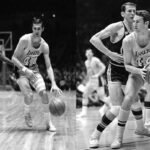
He dominated New York high school basketball at the famous Power Memorial Academy, leading his team to an unbelievable 95-6 record, which included a legendary 71-game winning streak.
After high school, he enrolled at UCLA to play for John Wooden’s powerhouse Bruins. Due to NCAA regulations at the time, freshmen were prevented from playing at the varsity level, so Alcindor had to sit out his first year. But when he finally stepped onto the court, he simply ruled the college ranks.
In 1969, the Milwaukee Bucks, entering only their second season in the league, made Alcindor the first overall choice in the NBA Draft. The timing was absolutely perfect for a new center to dominate the NBA. Bill Russell had just retired from the Boston Celtics, and Wilt Chamberlain was approaching his mid-35s.
Alcindor was an instant superstar. In his rookie 1969-70 season, he carried the Bucks to second place in the Eastern Division with a 56-26 record. Placing second in the league in scoring (28.8 PPG) and third in rebounding (14.5 RPG), he handily won the NBA Rookie of the Year honors.
During the offseason, the Bucks made a blockbuster trade for 31-year-old veteran guard Oscar “The Big O” Robertson. Supported by a stellar crew including Bobby Dandridge and Lucius Allen, Milwaukee recorded a league-best 66 victories in the 1970-71 season, including a record-breaking 20 straight wins. Alcindor won his first NBA Most Valuable Player (MVP) award and his first scoring title (31.7 PPG). The Bucks swept the Baltimore Bullets in the Finals, and Alcindor was named Finals MVP.
Before the start of the 1971-72 season, Alcindor converted from Catholicism to Islam and took the name Kareem Abdul-Jabbar, which means “noble, powerful servant.” As Abdul-Jabbar, he repeated as scoring champion (34.8 PPG) and NBA MVP. By 1974, in just his fifth year in the league, he secured his third MVP award. However, after Oscar Robertson retired following a brutal Finals loss to Boston in 1974, the Bucks plummeted. Feeling culturally isolated in Milwaukee, Kareem requested a trade to either New York or Los Angeles.
In 1975, the Lakers acquired Abdul-Jabbar in exchange for Junior Bridgeman, Dave Meyers, Elmore Smith, and Brian Winters. The second Abdul-Jabbar dynasty was officially born.
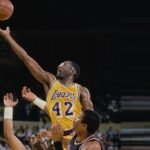
In his very first season in Los Angeles, his incredible contributions (27.7 PPG, 16.9 RPG) won him his fourth NBA MVP award. When legendary guard Jerry West took over as the Lakers’ coach the following year, Kareem claimed his fifth MVP award, tying the great Bill Russell’s record.
Everything changed in 1979. Using a first-round draft pick, the Lakers selected a 6-foot-9 charismatic point guard named Earvin “Magic” Johnson from Michigan State.
Johnson’s arrival marked the beginning of the “Showtime” era—a blitzkrieg fast break that brought the Lakers nine division titles in the final 10 years of Kareem’s career. In Magic’s rookie season (1979-80), the Lakers won the NBA Championship.
In a legendary moment, Kareem severely sprained his ankle in Game 5 after scoring 40 points. Unable to play in Game 6, the 20-year-old rookie Magic Johnson stepped in at center for the injured veteran, scoring 42 points to close out the Philadelphia 76ers. That same year, the 33-year-old Abdul-Jabbar cemented his place in history by winning a record sixth NBA MVP Award.
What made Kareem truly extraordinary was his longevity. While most players of his era retired or slowed down by their early 30s, Abdul-Jabbar maintained a strict physical fitness regimen that was decades ahead of its time. He practiced yoga, trained in martial arts to keep his limbs limber, and meditated before every single game to eliminate stress.
This dedication allowed him to duplicate his trademark weapon night after night: The Sky-Hook. Though labeled “unsexy” by Kareem himself, it became the most lethal and unblockable shot in basketball history. Instead of relying solely on raw size, Kareem brought agility, grace, and versatility to the center position.
On April 5, 1984, in a game against the Utah Jazz in Las Vegas, Kareem caught a pass from Magic Johnson, whirled, and launched his sky-hook. It drew nothing but net, giving him career point number 31,420—officially passing Wilt Chamberlain as the NBA’s all-time leading scorer.
Out of all his championships, Kareem noted that the 1985 title against the Boston Celtics was the sweetest. At age 38, many critics wrote him off as “washed up,” especially after Game 1, where the Celtics demolished the Lakers 148-114 in what became known as the “Memorial Day Massacre.” Kareem was held to just 12 points and 3 rebounds.
Devastated but focused, Kareem spent the next two days watching hours of game film and participating in marathon sprinting drills, refusing Pat Riley’s orders to take a break.
In Game 2, Kareem silenced the world by putting up 30 points, 17 rebounds, 8 assists, and 3 blocks in a massive Lakers win. Los Angeles went on to win the series in six games on Boston’s home floor, vanquishing the ghosts of the Boston Garden. At 38 years old, Kareem Abdul-Jabbar was named the Finals MVP.