Physical Address
304 North Cardinal St.
Dorchester Center, MA 02124
Physical Address
304 North Cardinal St.
Dorchester Center, MA 02124

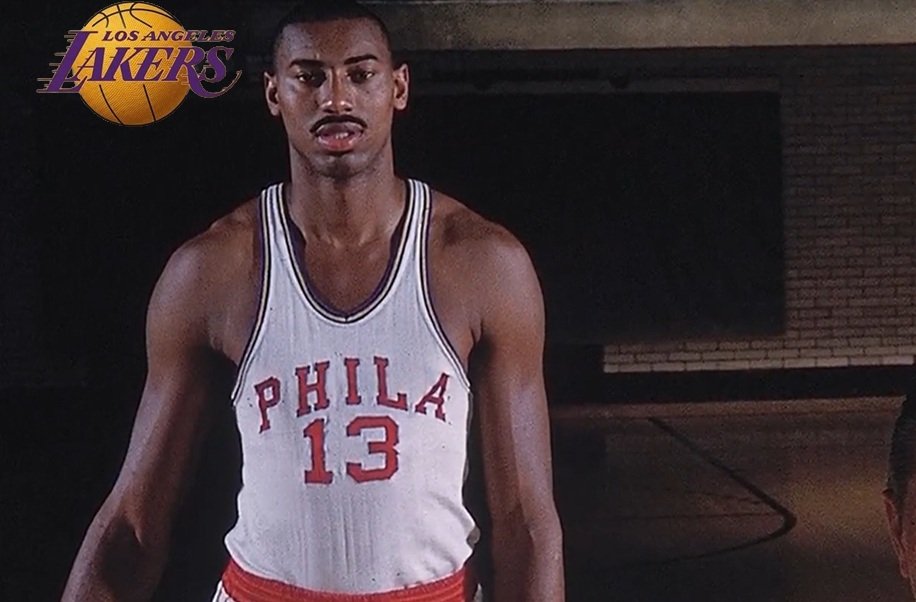
In the entire chronicle of global sports, there are elite athletes, and then there is Wilt Chamberlain. Standing a colossal 7-foot-1 and possessing the athletic vertical of a high-jumper combined with the strength of an Olympic weightlifter, “The Big Dipper” didn’t just break basketball rules—he forced the NBA to change the actual geometry of the court.
When Wilt arrived in Los Angeles later in his career to anchor the Purple and Gold, he brought a legendary aura that helped guide the 1971–72 Lakers to a historic 33-game winning streak and an NBA Championship. He was a statistical phenomenon wrapped in human form, setting records that modern sports analytics openly admit will never, ever be broken.
Before we dive into his mind-boggling numbers, let’s take a look at the official physical and historical snapshot of the most physically dominant force to ever play the game:
| Core Personal Metric | Official Archival Record Detail | The Strategic Context & Legacy |
| Full Name & Monikers | Wilton Norman Chamberlain (The “Big Dipper” / “Wilt the Stilt”) | Prefers “Big Dipper” because he always had to dip his head through doorways. |
| Physical Stature | Height: 7’1″ | Weight: 275 lbs | Possessed a 50-inch vertical leap and elite track-and-field agility. |
| NBA Championship Rings | 2-Time NBA Champion (1967, 1972) | Won his second title leading the legendary 1972 Los Angeles Lakers. |
| Regular Season MVPs | 4-Time NBA MVP (1960, 1966, 1967, 1968) | Dominated the league voting during the most competitive era of big men. |
| Finals MVP Honors | NBA Finals MVP (1972) | Won the award at age 35 with the Lakers, proving his unmatched longevity. |
To understand why Wilt Chamberlain is considered an absolute cheat code in sports history, you only have to look at his raw production data. His scoring years in the early 60s look like typos, but they are 100% real:
| NBA Career Era / Phase | Games Played | Field Goal % (FG%) | Free Throw % (FT%) | Rebounds Per Game (RPG) | Points Per Game (PPG) |
| The Scoring Monster (1959–1965) | 423 Games | .506 | .540 | 25.6 RPG | 40.6 PPG |
| The Championship Prime (1965–1968) | 244 Games | .572 | .456 | 23.8 RPG | 21.5 PPG |
| The LA Lakers Era (1968–1973) | 339 Games | .605 | .475 | 19.2 RPG | 17.7 PPG |
| Total Lifetime NBA Legacy | 1,045 Games | .540 | .511 | 22.9 RPG | 30.1 PPG |
📊 The 100-Point Holy Grail: On March 2, 1962, Wilt Chamberlain did the impossible by scoring 100 single points in a single NBA game against the New York Knicks—a record that remains the ultimate unachievable mountain in professional sports.
Wilt was so fundamentally unstoppable that the NBA literally had to change its structural rules just to give other teams a fair chance. No other player in history has single-handedly altered the rulebook like him:
| The Old Playground Style | The New NBA Rule Change | Why They Invented It |
| Widening the Lane (The Paint) | The lane was widened from 12 feet to 16 feet. | To keep Wilt further away from the basket so he couldn’t score on every single possession. |
| Offensive Goaltending | Players were banned from touching the ball on its downward flight. | Wilt would routinely just stand by the rim and guide his teammates’ missed shots inside. |
| Inbounding Over the Backboard | Teammates could no longer lob the ball from behind the baseline over the glass. | Lakers and Warriors players would just throw it over the rim, and Wilt would dunk it before landing. |
| Free Throw Free-Throws | Players must keep their feet planted behind the line during a free throw. | Wilt used to take two steps, jump from the free-throw line, and slam dunk the ball instead of shooting. |
For decades, fans have argued over who would win a prime matchup in the low post: the fluid, athletic Wilt Chamberlain or the raw, crushing power of Shaquille O’Neal. Let’s look at how these two Lakers giants match up analytically:
| Performance Asset | Wilt Chamberlain (The Big Dipper) | Shaquille O’Neal (The Diesel) | The Tactical Verdict |
| Physical Attributes | 7’1″, 275 lbs with elite track-and-field stamina. | 7’1″, 325 lbs with raw, bruising power. | Wilt holds the edge in continuous speed; Shaq wins on sheer collision force. |
| Scoring Mechanics | Famous for a soft finger-roll and a fadeaway bank shot. | Famous for the “Black Tornado” spin move and shattering rims. | Wilt relied on absolute finesse and height; Shaq relied on physical demolition. |
| Defensive Paint Rim Rule | Averaged an estimated 8 unofficial blocks per game. | Formidable rim protector with 2.5 official blocks per game. | Both controlled the paint entirely, forcing offenses to stay outside. |
When Wilt arrived in Los Angeles in 1968, he became a true Hollywood celebrity, fitting perfectly into the glamorous lifestyle of Southern California. On the court, he adjusted his game from a high-volume scorer to an elite defensive anchor and playmaker, proving his basketball genius.
His No. 13 jersey is permanently retired by the Los Angeles Lakers, and his name sits securely at the top of almost every rebounding record in existence. For gambling networks and sports purists who visit our platform, this page isn’t just an archive it’s a look at the absolute ceiling of human athletic potential.
Must Read: Kobe Bryant: The Black Mamba