Physical Address
304 North Cardinal St.
Dorchester Center, MA 02124
Physical Address
304 North Cardinal St.
Dorchester Center, MA 02124

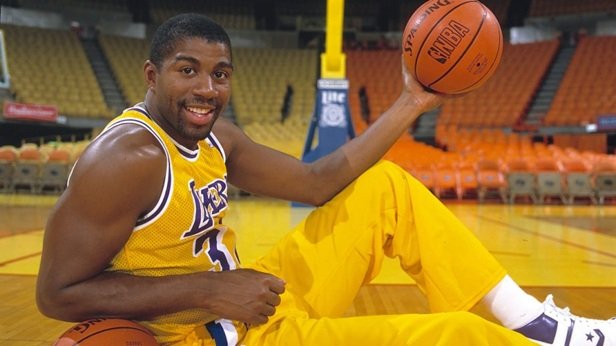
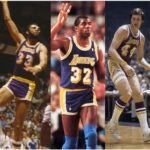
When discussing the history of professional basketball, certain names represent elite statistics, but only a select few signify a cultural shift. Earvin “Magic” Johnson Jr. belongs to the latter. Standing a towering 6-foot-9 but operating with the dazzling speed and floor-vision of a traditional point guard, Magic completely altered the geometry of the basketball court.
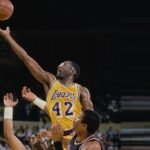
From his legendary high school battles in Michigan to his era-defining “Showtime” run with the Los Angeles Lakers, Magic didn’t just win games he saved the NBA from a massive viewership slump in the 1980s and turned the sport into premium global entertainment.
Before analyzing his historic statistical peak and intense rivalry with Larry Bird, here is the official structural profile of the greatest point guard to ever step onto a hardwood floor:
| Core Personal Metric | Official Archival Record Detail | The Strategic Context & Legacy |
| Full Name & Origin | Earvin Johnson Jr. (Born: August 14, 1959) | Born and raised in Lansing, Michigan; a natural-born winner at every level. |
| Physical Stature | Height: 6’9″ | Weight: 255 lbs | The tallest dedicated point guard in NBA history, shattering traditional position limits. |
| The Historic Nickname | “Magic” (Earned at age 15) | Dubbed by sportswriter Fred Stabley Jr. after a 36-point, 16-rebound, 16-assist game. |
| Draft Position | 1st Overall Pick (1979 NBA Draft) | Selected immediately by the Los Angeles Lakers out of Michigan State. |
| Championship Pedigree | High School, NCAA, NBA, & Olympic Gold | One of the elite few to win championships at every single competitive level. |
Many fans remember Magic for his flashy no-look passes, but his raw analytical data reveals an incredibly efficient scoring and floor-management system. Across his 13 seasons anchored in Hollywood, his numbers defined positional dominance:
| NBA Career Era / Phase | Games Played | Field Goal % (FG%) | Free Throw % (FT%) | Rebounds (RPG) | Assists Per Game (APG) | Points Per Game (PPG) |
| The Rookie & Rise (1979-1983) | 306 Games | .531 | .791 | 8.3 RPG | 9.4 APG | 17.8 PPG |
| The Peak Dynasties (1983-1988) | 389 Games | .524 | .848 | 6.5 RPG | 12.3 APG | 20.2 PPG |
| The Veteran Leader (1988-1991) | 243 Games | .490 | .891 | 6.8 RPG | 11.8 APG | 20.3 PPG |
| The Final Comeback (1996) | 32 Games | .466 | .857 | 5.7 RPG | 6.9 APG | 14.6 PPG |
| Total Lifetime NBA Legacy | 906 Games | .520 | .848 | 7.2 RPG | 11.2 APG | 19.5 PPG |
📊 The Ultimate Floor General Metric: Magic Johnson retired with a career regular-season average of 11.2 assists per game—a staggering metric that still stands as the #1 highest career average in NBA history.
To understand why opposing coaches spent sleepless nights trying to craft a defense against the Lakers, it is vital to contrast Magic’s unique physical traits against the standard, smaller point guards of his generation:
| Performance Attribute | Traditional 1980s Point Guards | The Magic Johnson System | The Tactical Advantage |
| Court Vision & Visibility | Stood between 6’0″ and 6’3″; views were easily blocked by tall defensive zones. | Stood at a massive 6’9″; could look completely over any defender’s shoulder. | Allowed him to spot an open teammate across the perimeter that smaller guards couldn’t see. |
| Transition & Fast Breaks | Relied on slowing down the ball to call rigid, pre-designed half-court sets. | Ran at full breakneck speed, improvising no-look passes in real-time transition. | Turned the game into an unpredictable track meet, exhausting the opposing team’s defense. |
| Interior Versatility | Bound strictly to the perimeter; couldn’t post up or defend larger forwards. | Could seamlessly play all 5 positions (famously started at Center as a rookie in the 1980 Finals). | Allowed the Lakers to run highly fluid, modern lineups without losing physical size under the rim. |
The history of the modern NBA was built on a singular, fierce dichotomy: the flashy, fast-paced “Showtime” Lakers of Los Angeles versus the gritty, blue-collar, hard-nosed Boston Celtics led by Larry Bird. This historic rivalry didn’t just capture the sports world; it exploded television viewership metrics.
| The Epic Rivalry Elements | Earvin “Magic” Johnson (LA Lakers) | Larry Bird (Boston Celtics) |
| Cultural Persona | Stylish, gregarious, operating under the bright lights and Hollywood celebrities. | Introverted, small-town hero embodying a relentless, blue-collar work ethic. |
| 1979 NCAA Championship | Led Michigan State to victory over Indiana State. | The most-watched college basketball game in the history of television. |
| Head-to-Head Finals History | Won the 1985 and 1987 NBA Titles against Boston. | Won the legendary, grueling 7-game 1984 NBA Title against Los Angeles. |
| Off-Court Reality | Developed a deep, lifelong friendship starting with a 1984 Converse commercial shoot. | Described Magic as a “friend forever” during his emotional retirement ceremony in 1992. |
On November 7, 1991, Magic shocked the world by announcing his HIV-positive status and immediate retirement. Rather than stepping out of the spotlight, he became a global beacon for health awareness and transitioned into an absolute powerhouse in the corporate boardroom. Through Magic Johnson Enterprises (MJE), he built an urban economic empire:
With a staggering estimated net worth of $800 million, Magic Johnson proved that his vision in the business world was just as flawless as his legendary no-look passes on the basketball court.