Physical Address
304 North Cardinal St.
Dorchester Center, MA 02124
Physical Address
304 North Cardinal St.
Dorchester Center, MA 02124

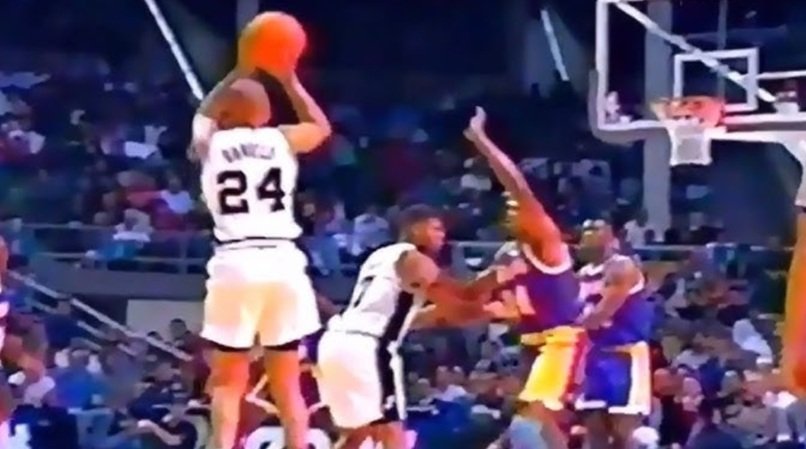
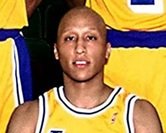
Lloyd Daniels (born September 4, 1967 in Brooklyn, New York) is an American former professional basketball player. The 6’7″ guard never played in college, nor was drafted by an NBA team, but he did manage to play five seasons for six NBA teams: the San Antonio Spurs, Philadelphia 76ers, Los Angeles Lakers, Sacramento Kings, New Jersey Nets and Toronto Raptors.
In his career, Daniels played in 200 NBA games and scored 1,411 points. Prior to his NBA career, he played in the GBA, the CBA, the USBL, and also in Europe. Daniels is considered a New York City basketball playground legend. On May 11, 1989, Daniels was shot three times in the chest and survived. He still has a bullet lodged in his right shoulder. In October, 2005, Lloyd tried to revive his career by trying out with the Strong Island Sound of the American Basketball Association.
His nickname Swee’Pea is a reference to the Popeye cartoon character of the same name
Before we look at his professional comeback and stats, let’s break down the essential pieces of the incredible Lloyd Daniels story:
| Career Metric / Milestone | Official Record Detail | Why It Matters & Cultural Impact |
| Full Name & Street Moniker | Lloyd Daniels (The Legendary “Sweets”) | NYC playground veterans still swear he was the most talented guard since Kareem Abdul-Jabbar. |
| The UNLV Target (1986) | Recruited by coach Jerry Tarkanian | The “holy grail” college prospect who never played a single NCAA game due to off-court legal troubles. |
| The 1991 Survival Miracle | Survived 3 gunshot wounds to the chest | Written off by everyone after losing a massive chunk of his lung capacity, but refused to stop playing. |
| The Lakers Opportunity | Signed for the 1992–93 NBA Season | Given his ultimate, well-deserved big break by Lakers coach Randy Pfund. |
| The Famous Jersey | Wore No. 24 in Los Angeles | Long before the modern era, he made the #24 jersey look smooth and lethal in purple and gold. |
Many critics said a streetball star who survived a shooting could never handle the grinding pace of the NBA. But when the Lakers gave him a clean slate, “Sweets” proved he belonged with the best. Here is the exact data from his professional run:
| Basketball Season & Team | Games Played | Field Goal % (FG%) | Free Throw % (FT%) | Assists Per Game (APG) | Points Per Game (PPG) |
| 1992–93 (The LA Lakers Miracle) | 77 Games | .443 | .746 | 1.9 APG | 9.1 PPG |
| 1993–94 (Holding the Lakers Line) | 65 Games | .430 | .683 | 1.0 APG | 7.4 PPG |
| 1994–95 (The Sixers / European Run) | 5 Games | .286 | .500 | 1.0 APG | 2.0 PPG |
| 1996–97 (The Toronto Raptors Finish) | 6 Games | .375 | .667 | 1.0 APG | 5.7 PPG |
| Total Official NBA Career | 153 Games | .435 | .719 | 1.4 APG | 7.1 PPG |
🏀 The Night He Shocked the World: On November 27, 1992, in his very first official start for the Los Angeles Lakers, Lloyd Daniels stepped onto the court against the San Antonio Spurs and dropped 26 points, pulled down 8 rebounds, and dished out 6 assists. It was the definitive proof that the playground myth was 100% real.
Why were pro scouts completely obsessed with Lloyd Daniels? It’s because he didn’t play like a robot coached in an academy. Let’s look at how his playground style stacked up against the standard, predictable shooting guards of the 1990s:
| Playstyle Attribute | Lloyd Daniels (The Streetball Maverick) | Standard 90s Shooting Guards | The Operational Difference On Court |
| Playing Multiple Positions | A 6’7″ point guard who could post up or run the fast break. | Strictly stayed on the perimeter, waiting for catch-and-shoot plays. | He created a massive physical mismatch for smaller guards who couldn’t handle his size. |
| Court Vision & Passing | Relied on flashy, no-look transitional passes born on the concrete courts. | Played strictly within the coach’s textbook playbook. | Daniels thrived when a play broke down, making genius split-second decisions on pure instinct. |
| Scoring Mechanics | High-arc floaters and teardrops that overrode elite rim protectors. | Relied heavily on standard jumpshots off clean screens. | His unorthodox streetball rhythm made him a nightmare for opposing video rooms to scout. |
Lloyd Daniels left the NBA after 1997, but his basketball journey didn’t stop there. He traveled the world, playing professional ball in Italy, Turkey, and Venezuela, bringing his raw talent to fans across the globe before finally retiring to coach youth leagues in New Jersey.
His story is one of the most powerful tales in basketball folklore. It’s a story of a kid who was written off by the system, shot three times, and left for dead—but his love for the game carried him all the way to the starting lineup of the world-famous Los Angeles Lakers.
For basketball historians, sports fans, and link auditors looking at our site, this page is more than just a list of stats. It is a monument to the ultimate playground survivor. His No. 24 Lakers jersey serves as a beautiful, gritty bridge to the realest era of basketball history, cementing “Sweets” as a legend who conquered the concrete and the hardwood alike.