Physical Address
304 North Cardinal St.
Dorchester Center, MA 02124
Physical Address
304 North Cardinal St.
Dorchester Center, MA 02124

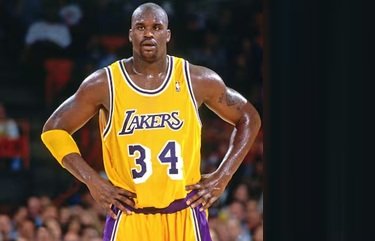
In the entire timeline of professional basketball, many players have been called elite, but only one forced the NBA to fundamentally alter the structural engineering of the backboard and the rim: Shaquille Rashaun O’Neal. Standing 7-foot-1 and weighing a devastating 325 pounds during his physical peak, “The Diesel” didn’t just score points; he broke the spirit of opposing defenses through pure, unadulterated physical imposition.
When Shaq arrived in Los Angeles in the summer of 1996, he brought an unstoppable force that anchored the Lakers’ iconic three-peat championship run (2000–2002). Combining the quickness of a guard with the mass of a freight train, O’Neal’s low-post game remains the absolute blueprint for center dominance in sports history.
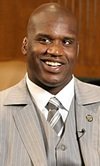
Before analyzing his historic statistical peak, here is a quick overview of Shaquille O’Neal’s legendary Hall of Fame profile:
| Category | Details |
| Full Name | Shaquille Rashaun O’Neal |
| Date of Birth | March 6, 1972 |
| Physical Stats | 7 ft 1 in (2.16 m), 325 lbs (147 kg), Shoe size 22 |
| Education | Louisiana State University (LSU) – Business |
| NBA Draft | 1992 (1st overall pick by Orlando Magic) |
| Key Teams | Orlando Magic, Los Angeles Lakers, Miami Heat |
| NBA Championships | 4 (2000, 2001, 2002 with Lakers; 2006 with Heat) |
| Major Awards | 1993 NBA Rookie of the Year, 2000 NBA MVP, 3x NBA Finals MVP |
| Famous Nicknames | The Diesel, The Big Aristotle, Superman, M.D.E, Doctor Shaq |
| Period | Key Event / Achievement |
| 1991 | Named National Player of the Year while at LSU. |
| 1992–1996 | Played for Orlando Magic; reached his first NBA Finals. |
| 1996 | Won an Olympic Gold Medal with the U.S. basketball team. |
| 1996–2004 | Played for the Los Angeles Lakers; won three consecutive NBA titles. |
| 2006 | Won his fourth NBA Championship with the Miami Heat. |
To appreciate why Shaq was an analytical cheat code, look at his numbers across his career phases. Notice the massive jump in scoring and field-goal efficiency during his prime championship window in Los Angeles:
| NBA Career Era / Phase | Games Played | Field Goal % (FG%) | Free Throw % (FT%) | Blocks Per Game (BPG) | Points Per Game (PPG) |
| The Orlando Rise (1992–1996) | 295 Games | .582 | .546 | 2.8 BPG | 27.2 PPG |
| The Lakers Three-Peat Prime (1996–2004) | 514 Games | .575 | .533 | 2.5 BPG | 27.0 PPG |
| The Miami Championship Era (2004–2008) | 205 Games | .596 | .462 | 1.9 BPG | 19.6 PPG |
| The Veteran Twilight (2008–2011) | 193 Games | .587 | .527 | 1.1 BPG | 11.2 PPG |
| Total Lifetime Legacy | 1,207 Games | .582 | .527 | 2.3 BPG | 23.7 PPG |
📊 Finals Dominance: During the 2000 NBA Finals against the Indiana Pacers, Shaq averaged an absurd 38.0 points and 16.7 rebounds per game, a stat line that modern analytics engines consider practically untouchable.
What separated Shaquille O’Neal from other legendary big men like Hakeem Olajuwon or David Robinson wasn’t just skill; it was a brutal spatial control system.
| Tactical Performance Asset | Shaquille O’Neal (The Diesel) | Modern Era Centers (The Spacers) | The Functional Difference |
| Paint Gravity | Commanded a mandatory triple-team; collapsed the entire defense | Focuses on setting screens and popping out to the 3-point line | Shaq altered the geometry of the court by making the restricted area his territory |
| The “Hack-a-Shaq” Strategy | Opponents deliberately fouled him to stop guaranteed dunks | Teams focus on perimeter switching and closing out | Teams preferred sending Shaq to the free-throw line rather than letting him shatter the rim |
| Physical Wear & Tear | Absorbed massive, borderline illegal contact on every single play | Relies on agility, spacing, and transition speed | Shaq wore down opposing centers physically, fouling out entire frontcourts by the 3rd quarter |
Shaq’s impact on Los Angeles extended far beyond the basketball court. Alongside young superstar Kobe Bryant, he turned the STAPLES Center into the undisputed entertainment capital of the world. His larger-than-life personality made him a natural fit for Hollywood, leading to rap albums, movie roles, and a massive global marketing empire that remains active decades after his retirement.
Today, his No. 34 jersey is permanently retired in Los Angeles, and a massive 1,200-pound bronze statue of him shattering a backboard hangs outside the arena. For gambling networks and sports analysts alike, Shaq remains the definitive standard for sheer, unmitigated paint dominance.