Physical Address
304 North Cardinal St.
Dorchester Center, MA 02124
Physical Address
304 North Cardinal St.
Dorchester Center, MA 02124

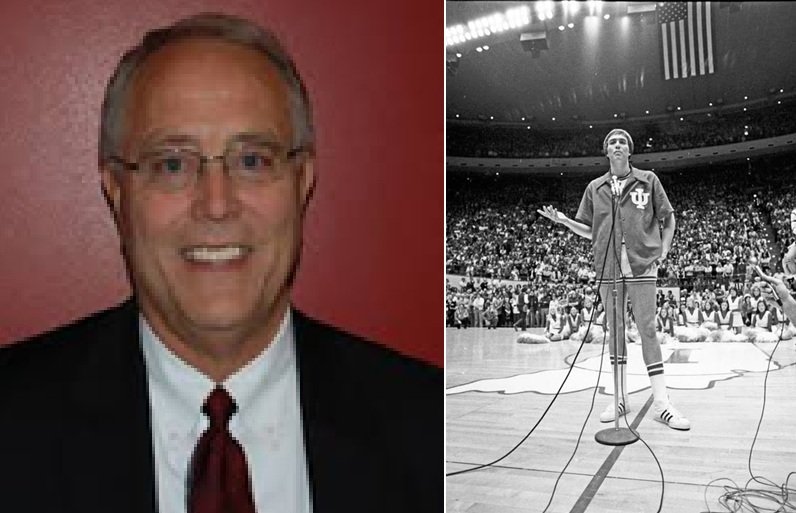
In a franchise historically defined by Hollywood glamour, blinding flashbulbs, and larger-than-life superstars, it’s easy for the casual basketball fan to forget the glue guys. We talk about the scoring titles, the iconic sky-hooks, and the players who wore the flashy rings, but any seasoned basketball purist will tell you that championship cultures aren’t built on star power alone. They are forged in the shadows by guys who dive for loose balls, set brutal screens, and play lockdown defense without ever demanding a headline. Tom Abernethy was the absolute embodiment of that blue-collar basketball spirit.
Standing 6-foot-7 and weighing a solid 220 pounds, Abernethy wasn’t on the court to put on a show; he was there to win. His stint with the Los Angeles Lakers in the late 1970s represents a unique, gritty era of basketball just before the modern spectacle took over. He was the ultimate teammate a player with an elite basketball IQ who understood that doing the dirty work was just as important as dropping thirty points.

Thomas Craig Abernethy (Tom)
Position: F
Height: 6’7″ Weight: 220 lbs.
Born: May 6, 1954 in South Bend, IN
High School: Saint Joseph in South Bend, IN
College: Indiana University
Drafted by the Los Angeles Lakers in the 3rd round (9th pick) of the 1976 NBA draft.
After starring at Indiana University, the 6’7″ Abernethy was drafted by the Los Angeles Lakers in the third round of the 1976 NBA Draft. He spent five years in the league as a member of the Lakers and the Golden State Warriors, scoring 1,779 career points.
| Regular Season Stats | |||||||||||||||||
| Year | Age | Team | G | FG% | FT% | 3P% | REB | RPG | AST | APG | STL | BLK | PF | Pts | PPG | ||
| 1976-77 | 22 | LAL | 70 | .484 | .754 | .000 | 291 | 4.2 | 98 | 1.4 | 49 | 10 | 118 | 439 | 6.3 | ||
| 1977-78 | 23 | LAL | 73 | .498 | .820 | .000 | 265 | 3.6 | 101 | 1.4 | 55 | 22 | 122 | 493 | 6.8 | ||
| 1978-79 | 24 | GSW | 70 | .515 | .745 | .000 | 216 | 3.1 | 79 | 1.1 | 39 | 13 | 133 | 422 | 6.0 | ||
| 1979-80 | 25 | GSW | 67 | .481 | .683 | .000 | 191 | 2.9 | 87 | 1.3 | 35 | 12 | 118 | 362 | 5.4 | ||
| 1980-81 | 26 | GSW | 10 | .333 | .667 | .000 | 8 | 0.8 | 1 | 0.1 | 1 | 0 | 5 | 4 | 0.4 | ||
| 26 | IND | 29 | .429 | .579 | .000 | 40 | 1.4 | 18 | 0.6 | 6 | 3 | 29 | 59 | 2.0 | |||
| TOT | 39 | .424 | .591 | .000 | 48 | 1.2 | 19 | 0.5 | 7 | 3 | 34 | 63 | 1.6 | ||||
| 5 Season Totals | 319 | .492 | .747 | .000 | 1011 | 3.2 | 384 | 1.2 | 185 | 60 | 525 | 1779 | 5.6 | ||||
Extended Stats Explanations
| Year | Age | Team | Lg | G | MPG | PPG | EFF | AV | VI | PPFGA | PPR | RbRate |
| 1976-77 | 22 | LAL | NBA | 70 | 19.7 | 6.3 | 9.63 | 6.3 | 3.3 | 1.076 | 0.00 | 10.8 |
| 1977-78 | 23 | LAL | NBA | 73 | 18.0 | 6.8 | 9.08 | 6.2 | 3.2 | 1.089 | 1.32 | 10.3 |
| 1978-79 | 24 | GSW | NBA | 70 | 17.4 | 6.0 | 7.81 | 5.4 | 2.7 | 1.101 | 1.70 | 9.6 |
| 1979-80 | 25 | GSW | NBA | 67 | 18.2 | 5.4 | 6.82 | 4.7 | 2.7 | 1.022 | 1.56 | 8.6 |
| 1980-81 | 26 | GSW | NBA | 10 | 3.9 | 0.4 | 0.90 | 0.2 | 0.3 | 0.926 | -3.44 | 11.4 |
| 26 | IND | NBA | 29 | 8.9 | 2.0 | 2.76 | 1.3 | 1.2 | 0.917 | 2.27 | 8.5 | |
| TOT | NBA | 39 | 7.6 | 1.6 | 2.28 | – | 1.0 | 0.917 | 1.52 | – | ||
| 5 Season Totals | 319 | 17.0 | 5.6 | 7.62 | 16.5 | 2.8 | 1.067 | 2.29 | 0.0 | |||
Playoff Stats
| Year | Team | Lg | G | Min | Pts | PPG | FGP | FTM | FTA | FTP | 3PP | REB | RPG | AST | APG | STL | BLK | TO |
| 1976-77 | LAL | NBA | 11 | 214 | 64 | 5.8 | .420 | 22 | 27 | .815 | .000 | 40 | 3.6 | 22 | 2.0 | 0 | 0 | 0 |
| 1977-78 | LAL | NBA | 2 | 12 | 4 | 2.0 | .250 | 2 | 2 | 1.000 | .000 | 2 | 1.0 | 1 | 0.5 | 0 | 0 | 0 |
| Totals | 13 | 226 | 68 | 5.2 | .407 | 24 | 29 | .828 | .000 | 42 | 3.2 | 23 | 1.8 | 0 | 0 | 0 | ||
You cannot understand Tom Abernethy’s professional grit without looking at where his basketball mind was shaped. Born on May 6, 1954, in the hoop-crazy state of Indiana, Abernethy was raised on fundamentals. When he packed his bags for Indiana University, he entered the fiery kingdom of Coach Bob Knight. Playing for Knight wasn’t just about playing basketball; it was a psychological and physical survival course.
Knight demanded flawless execution, defensive perfection, and absolute selflessness. Abernethy didn’t just survive this brutal system; he thrived in it.
The climax of his collegiate journey came during the legendary 1975–76 season. Abernethy was a vital starter and the defensive backbone of that iconic Indiana Hoosiers squad. That team did something that hasn’t been repeated in men’s college basketball since: they went an unbelievable 32-0 completely undefeated to capture the NCAA National Championship. When you spend your formative years locking down opponents under Bob Knight and making history on an undefeated roster, you develop a brand of mental toughness that stays with you forever. That was the elite, disciplined pedigree Abernethy brought to the professional ranks.
In 1976, the Los Angeles Lakers recognized that underlying value and selected Abernethy in the NBA Draft. Walking into the Lakers locker room in the late 1970s meant entering a franchise in transition. The era of Jerry West had passed, and the team was looking for an identity. While the roster possessed plenty of scoring talent, it desperately lacked structural discipline—the kind of defensive accountability that stops a bleeding run in the second quarter.
Abernethy became the ultimate safety net for the coaching staff. He was the guy you subbed in when the opposing team’s star forward was getting too hot. He didn’t need the ball in his hands to feel important. Instead, he would execute the perfect baseline cut, hit a steady mid-range jumper, or fight through a grueling back-screen to free up a teammate. His steady, efficient shooting inside the arc (.492 FG%) meant that the team never lost its tactical edge when the star players went to the bench to rest. He bridged the gap beautifully, setting a standard of professional discipline just as the very early seeds of the “Showtime” era were being planted in Los Angeles.
In an era that was starting to lean heavily into high-flying, athletic spectacles, Abernethy succeeded by outthinking everyone on the floor. He saw the game develop a couple of frames ahead of his opponents. If a young perimeter defender gambled on a passing lane, Abernethy was already moving to fill the open space. He rarely turned the ball over, playing with a composed maturity that settled the entire unit down during chaotic stretches of play.
On the defensive end, his positioning was a work of art. He didn’t rely on spectacular, athletic blocks that ended up on highlight reels; he relied on verticality, chest-to-chest contact, and denying the preferred driving lanes of the league’s elite scorers. He would absorb the bumps, contest the shot cleanly, and immediately box out to secure the defensive possession. With 371 career assists and 165 steals, his impact was felt in every single facet of the game, proving to the basketball world that longevity in the league is earned by making the winning plays that don’t always grab the headlines.
Basketball is a journey that often takes players far beyond their initial horizons, and Abernethy’s career was no exception. After his impactful, steady years with the Los Angeles Lakers, he took his veteran leadership to the Golden State Warriors and later back home to the Indiana Pacers. In every locker room he entered, young players looked up to him as the blueprint of how to survive and sustain a career in the league through sheer professionalism and work ethic.
When his NBA chapter concluded, Abernethy traveled overseas to Europe. In the highly tactical, European style of play. Where team strategy and ball movement are prioritized over raw athletic isolation. Abernethy was an absolute revelation. His fundamental upbringing under Bob Knight allowed him to read European defenses with ease, leading his teams in efficiency and showing international fans the pure beauty of fundamentally sound basketball.
Tom Abernethy retired from active professional play in the mid-1980s, leaving behind a legacy that every coach respects deeply. He had won at the absolute highest level in college, proved his worth in the gold standard of the NBA, and maintained his reputation as a true gentleman of the sport.
But a life dedicated to basketball doesn’t just stop when the jersey is hung up. Abernethy turned his focus toward youth development, founding elite basketball academies designed to teach young boys and girls the exact same core principles that defined his own life: defensive discipline, unselfish passing, and emotional control under pressure. He didn’t open schools to create flashy streetballers; he opened them to build true basketball players. Today, when purists look back at the historical rosters of the Los Angeles Lakers, Tom Abernethy stands tall as a reminder that heroes come in many forms, and sometimes, the most valuable player is the one who silently holds the entire floor together.